
Discover how AI agents automate business tasks, enhance efficiency, and optimize global trade. Learn how EximGPT changes AI-driven trade operations.
Davos Pham•6/1/2025

Define pharma supply chain consulting and its growing necessity in a complex, regulated industry. Briefly state the article's focus: leveraging consulting for efficiency, compliance, and competitive advantage.
The pharmaceutical industry operates on a foundation of trust, quality, and—above all—timely patient access to life-saving medications. The supply chain that underpins this mission is arguably one of the most complex, regulated, and critical logistical networks in the world. From the sourcing of Active Pharmaceutical Ingredients (APIs) in one hemisphere to the cold-chain distribution of a finished biologic product in another, the journey is fraught with potential disruption. This is why specialized pharma supply chain consulting has become not just a helpful service, but a necessity for survival and growth.
pharma supply chain consulting a necessity for survival and growth.
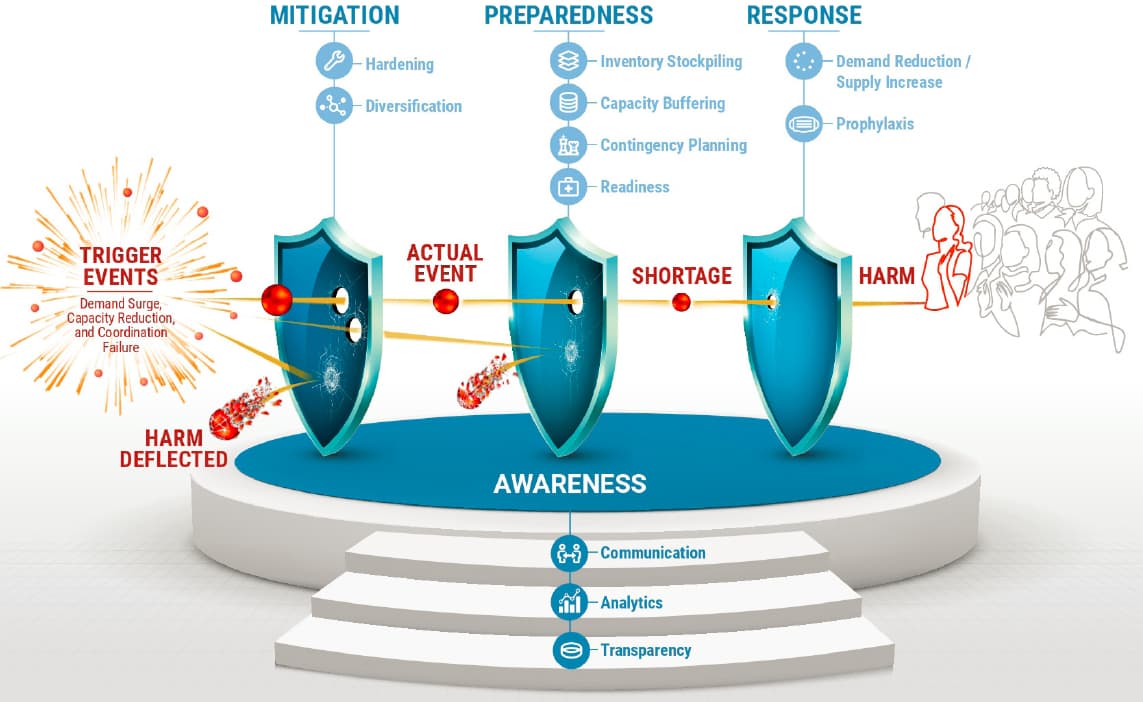
In recent years, the industry has been subjected to unprecedented pressures: geopolitical tensions, trade disputes impacting international trade, the lingering aftershocks of a global pandemic, and increasingly stringent regulatory demands. These factors have exposed critical vulnerabilities in traditional, cost-optimized supply chains. The drive to create truly resilient and agile networks is now the top strategic priority for pharmaceutical executives worldwide.
The fundamental difference between pharmaceutical supply chain management and that of other industries lies in its unique cargo and the high stakes involved. A delay in an automotive part may disrupt a production line; a disruption in the pharmaceutical supply chain can directly impact patient health and national security. This complexity requires a consulting approach that goes beyond standard logistics—it demands deep expertise in regulatory compliance, cold-chain integrity, and the intricate global network of drug development and distribution.
A generic consulting firm simply cannot provide the level of nuanced, industry-specific advice required. Effective pharma supply chain consulting integrates pharmaceutical knowledge—from clinical trial phases to post-market surveillance—with advanced supply chain theory. It’s an end-to-end perspective, spanning from raw material sourcing (upstream) to patient delivery (downstream).

The Complex Ecosystem
For a modern pharmaceutical company to navigate the current landscape successfully, its supply chain must be transformed from a cost center into a strategic competitive advantage. Expert pharma supply chain consulting focuses on several core areas to achieve this transformation.
The COVID-19 pandemic highlighted the fragility of long, single-source supply lines, particularly the reliance on key markets like China and India for APIs and generic drugs. Data from recent years underscores this vulnerability: a significant percentage of U.S. generic drugs and their key ingredients are sourced internationally.
The consulting focus here is on creating a geographically diverse network with built-in redundancies.
The slow, paper-heavy processes of the past are incompatible with the speed required by modern healthcare. Digital transformation is the engine of supply chain agility.
As biopharmaceuticals, specialty drugs, and cell/gene therapies—products requiring strict temperature control—become the industry’s growth engine, cold-chain management is more critical than ever.
A key offering in pharma supply chain consulting is the optimization of the cold chain, often referred to as "temperature-controlled logistics." This includes:
Pharma supply chain consulting
The pharmaceutical industry is perhaps the most regulated sector in the world. Every movement of a drug—from API to finished product—is subject to rigorous Good Manufacturing Practice (GMP) and Good Distribution Practice (GDP) standards, which often differ across borders. A key function of pharma supply chain consulting is to ensure end-to-end compliance in a multi-jurisdictional environment.
Instead of viewing regulation as a barrier, top-tier consultants help companies leverage compliance as a competitive advantage.
The demand for global solutions to these regulatory and logistical challenges is driving the need for consulting that can integrate diverse regulatory requirements into a cohesive, single-strategy framework. This enables pharmaceutical companies to launch products faster and maintain market access across all key geographies.
The next wave of supply chain transformation is moving beyond pure efficiency and cost control to focus on environmental and social governance (ESG) goals and direct patient engagement. Pharma supply chain consulting is at the forefront of designing these future-proof models.
The environmental footprint of the pharmaceutical supply chain—especially due to the energy use in manufacturing, cold-chain infrastructure, and air freight—is under increasing scrutiny.
Driven by personalized medicine and an aging population, the DTP model—delivering medication directly to the patient's home—is rapidly gaining traction. This changes the distribution model entirely, shifting the "last mile" focus from the pharmacy/clinic to the patient's mailbox.
Pharma supply chain consulting assists in designing and implementing these complex DTP networks, which require sophisticated planning to manage patient privacy (HIPAA, GDPR), temperature control, and white-glove home delivery services, especially for specialty or investigational products.
The modern pharmaceutical supply chain is a highly dynamic and demanding environment, continuously redefined by new products, volatile geopolitical forces, and evolving regulatory mandates. To achieve true resilience, cost-effectiveness, and compliance, pharmaceutical companies require a specialized, strategic partner.
Expert pharma supply chain consulting provides the critical foresight and operational expertise to turn complexity into a competitive edge. By focusing on risk mitigation, digital enablement, and the implementation of robust global solutions—from advanced analytics to next-generation cold-chain logistics—consultants empower clients to ensure product quality and, most importantly, deliver life-changing medicines to patients, anywhere in the world, on time, every time. This strategic partnership is the key to unlocking a more stable, agile, and patient-centric future for the pharmaceutical industry.
Related topic:
Discover how AI agents automate business tasks, enhance efficiency, and optimize global trade. Learn how EximGPT changes AI-driven trade operations.

Boost your import-export email reply rates. Learn strategies for personalization, structure, and avoiding common mistakes in global sales outreach.
Discover how AI agents automate business tasks, enhance efficiency, and optimize global trade. Learn how EximGPT changes AI-driven trade operations.
Boost your import-export email reply rates. Learn strategies for personalization, structure, and avoiding common mistakes in global sales outreach.
We use cookies
We use cookies to improve your experience, analyse traffic, and deliver personalised content and ads. Essential cookies for security and core functionality are always enabled. By clicking "Accept", you consent to our use of additional cookies.
For more information, see our privacy policy.