Technology
Export Lead Generation with AI: Find Active Importers
Apr 9, 2026
Artificial Intelligence
Find export leads that actually buy: describe your ideal buyer, find importers in shipment data, check each company and contact, then write a first email.
March 31, 2026Last updated October 11, 2026By Juno, EximAgent Research4 min readView as Markdown

Good export leads are companies that already import what you sell. Instead of starting from a generic directory or a trade-show contact list, start from evidence of buying, then narrow it down, check it and write to the right person. This playbook breaks that into four steps any export team can run, with or without AI.
Most lists of "leads" are really lists of names. The company might be in the right industry but never import, or import once five years ago, or buy only from a single long-standing supplier. Sending the same email to all of them wastes time and burns your reputation with the few who might have been interested.
A good export lead has three things: a real, recent need for your product; a reachable decision-maker; and a reason to listen to you.
Before you search, write down who you're looking for. A one-page ideal buyer profile saves hours later:
If you haven't chosen markets yet, do that first. Our guide to AI sales analysis explains how to size a market from shipment data.
Shipment and customs records show which companies actually received goods in your category, how often and from where. That's the closest thing to a list of proven buyers.
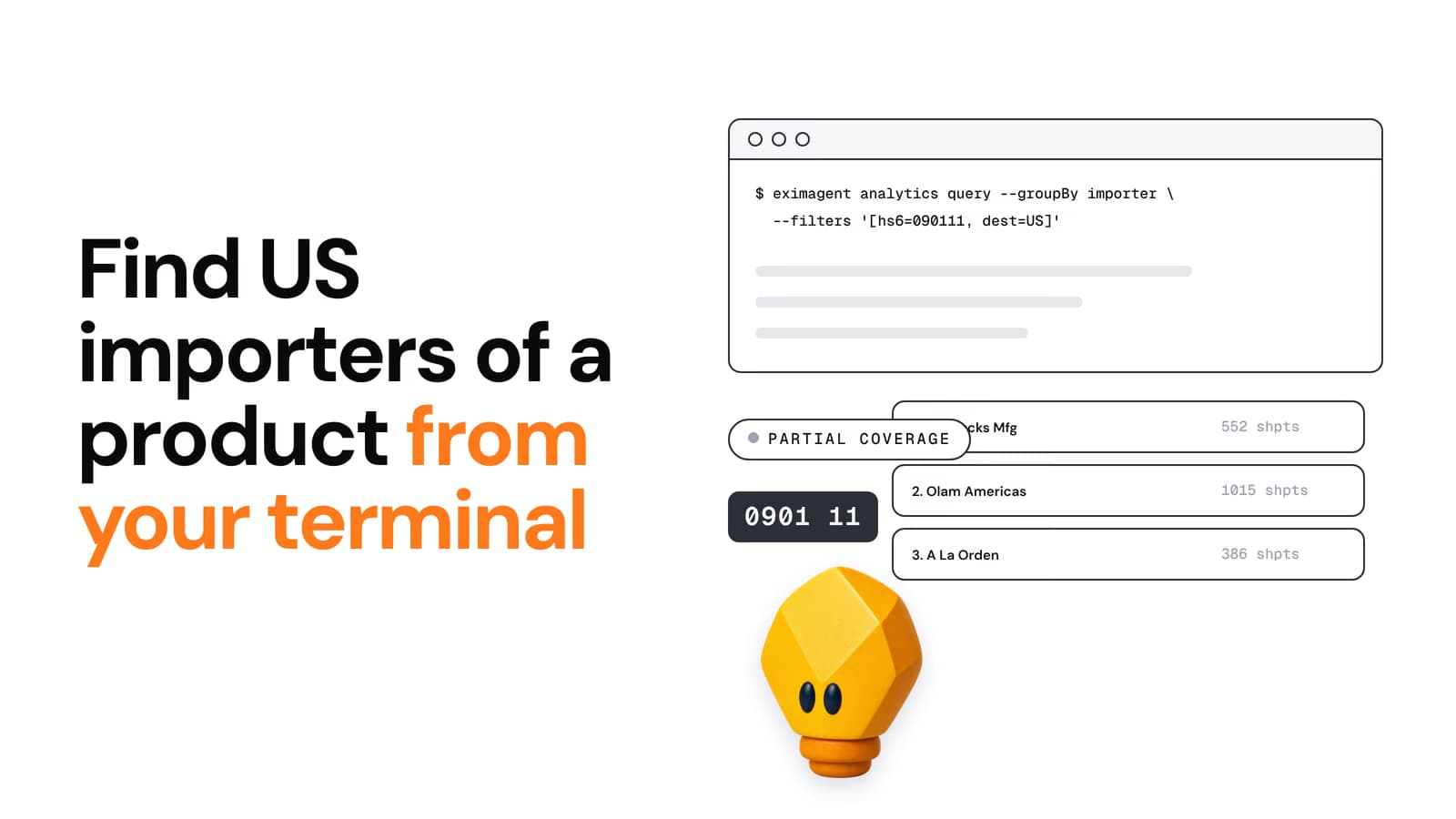
Search by HS code and market, then sort the importers by how often they buy and how recently. A company with repeated shipments over the past year is a far better lead than one with a single shipment. You can explore this on the trade data page or browse the company directory of US importers.
Other sources still help: trade associations, exhibitor lists from industry fairs, and marketplaces. Use them to add to the list, then check each name against import activity where you can.
Want a head start? Get a shortlist of importers for your product.
Before you write, spend a few minutes on each company:
If you sell into regulated or higher-risk markets, a quick sanctions check on the company is part of basic due diligence.
Keep it short and specific:
Write in the buyer's language where it matters, and don't rely on translation alone. Our guide on language barriers in export sales covers what changes from market to market. Then follow up personally if you hear nothing; a polite second note is normal in B2B.
Each step above is mostly reading and sorting, which is where AI saves time. EximAgent's Outbound agent finds and researches buyers, finds contacts and checks them, and drafts personalised outreach, sourcing buyers from trade data or from large-scale internet research depending on the pipeline you choose. If you want the AI side in more depth, see our guide to AI lead generation for exporters. For the wider picture of finding buyers abroad, see how to find buyers for export.
Where can I find export leads for free?
Start with public trade statistics to choose a market, then use trade association member lists, fair exhibitor lists, and free trade statistics and directory searches to find importers. Check each one before you write.
What is the difference between export leads and buyers?
A lead is a company that might buy. It becomes a qualified lead when you've confirmed it imports your category and you've found the right contact.
Should I focus on new customers or existing ones?
Both. Winning new buyers grows the business, but repeat orders from existing buyers are usually cheaper to earn. Use this playbook for new markets and keep a separate routine for existing customers.
How many leads should I contact at once?
Fewer than you think. Twenty well-researched importers with personalised emails usually beat hundreds of generic ones.
Start your lead list. Tell Outbound what you sell and where, and get a checked shortlist of importers to write to. Start free (free plan, no card).
EximAgent Research writes practical guides on finding buyers, reading trade data and checking HS codes, tariffs and sanctions.
Enter your email to receive the latest trade insights, guides, and HS-code explainers from EximAgent Blog.