Global Trade
How to Find Buyers for Export: A Practical Guide
Sep 29, 2026
Economy
Master automated outreach in 2026. Our guide helps export-import teams connect better with buyers across time zones and languages.
April 17, 2026Last updated October 11, 2026By Davos Pham7 min readView as Markdown

EximAgent is an AI sales team for export-import. Its Outbound agent helps you find buyers for export and drafts outreach.
Getting a reply from an overseas buyer in 2026 is harder than it has ever been. Generic email blasts land in spam. LinkedIn DMs that sound like templates get ignored. And for export-import teams working across time zones and languages, the cost of a wasted outreach sequence is not just a missed reply — it's a missed shipment, a missed season, a missed relationship. This guide walks through what actually works for automated outreach this year, with a focus on what professionals can realistically put into practice today.
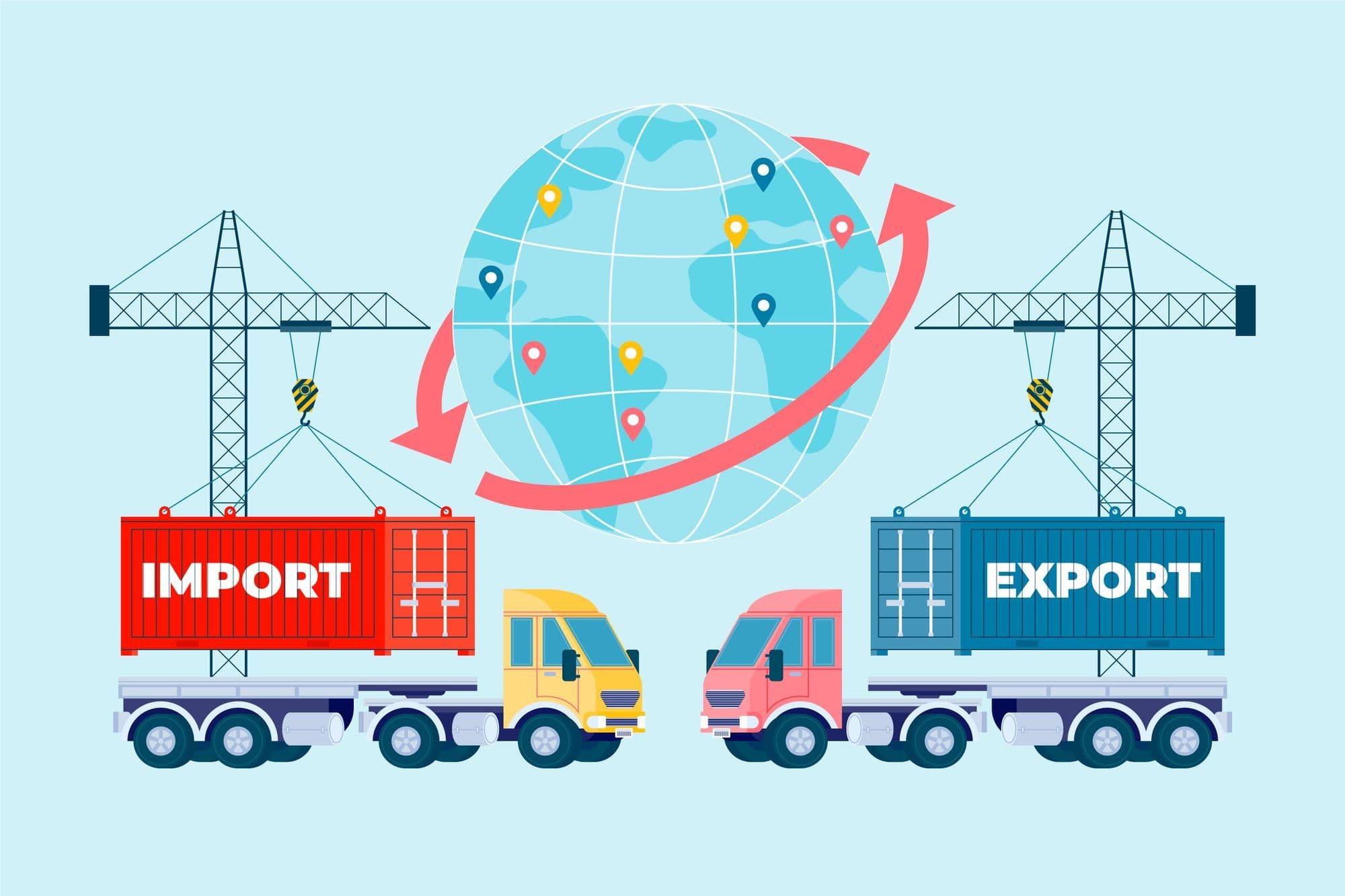
For years, "automated outreach" meant uploading a CSV, picking a template, and hitting send. That model is breaking down. Buyers — especially in import/export are savvier now. They can spot a templated English-language email from a vendor who has never looked at what their company actually trades.
The shift underway is toward outreach that is grounded in a real knowledge base about both sides of the conversation: who you are, what you sell, and who the buyer is, what they source, and how they operate. When both sides are represented in data, automation stops feeling like spam.
This is the premise behind EximAgent: before any outreach goes out, you set up your company profile, products and USP. That profile becomes the foundation every agent draws from. Without it, personalization is guesswork. With it, every email can reference something true.
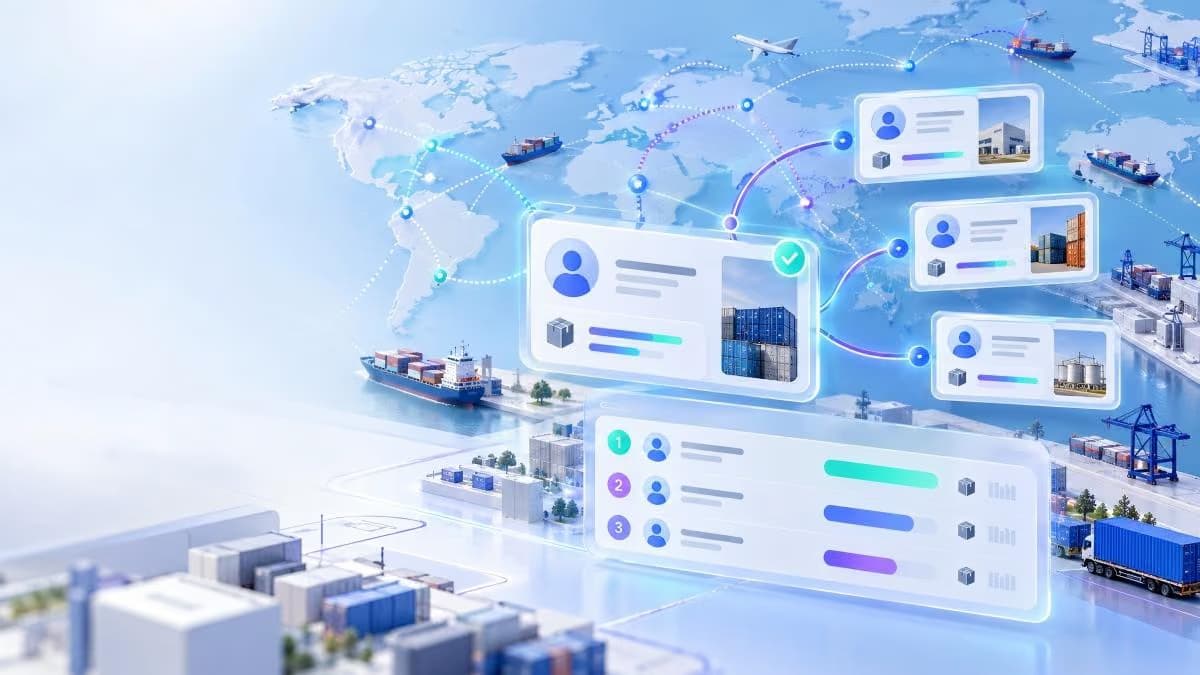
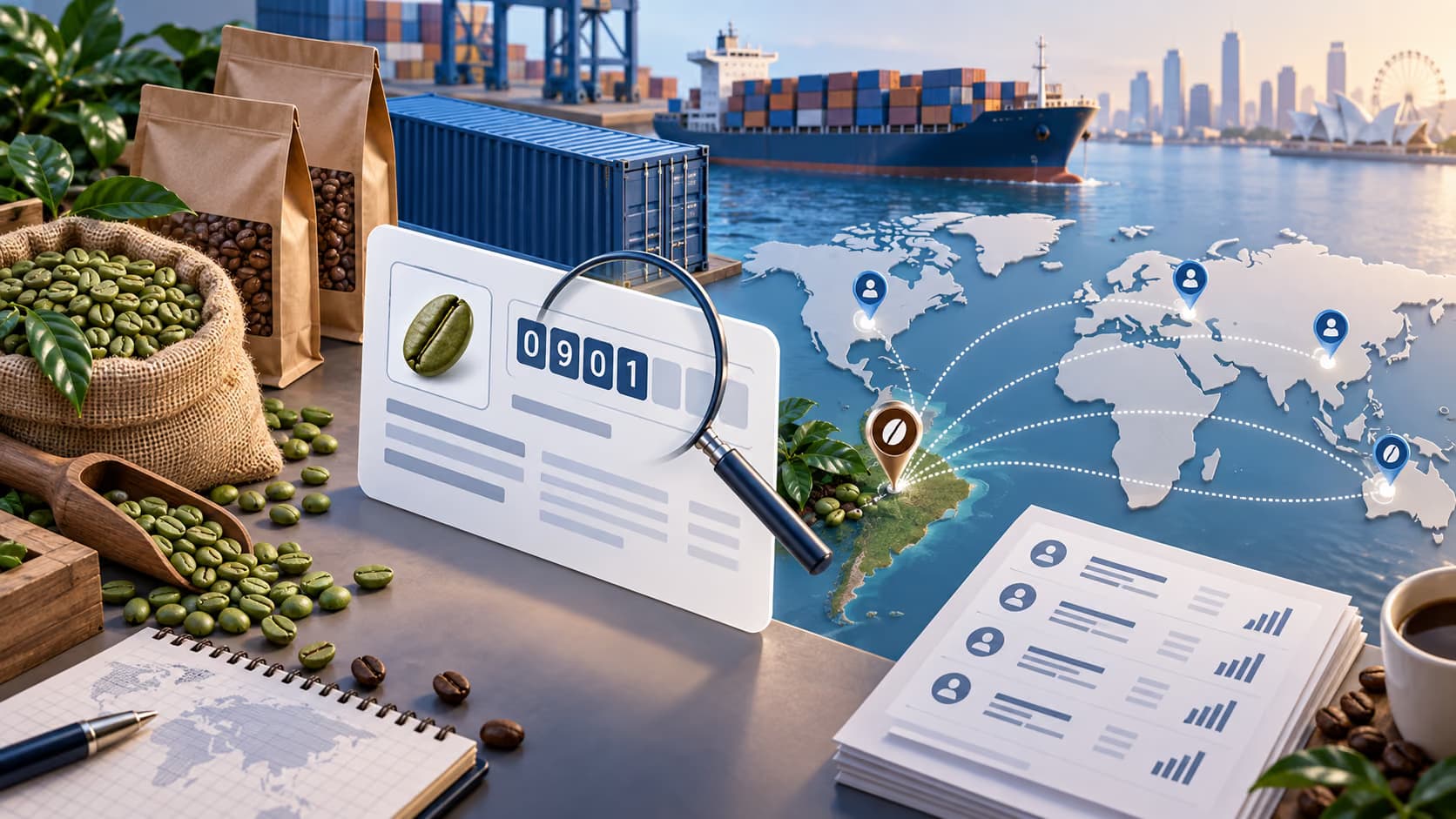
The biggest bottleneck in international trade outreach isn't the volume of messages sent—it's the precision of the discovery. Identifying who actually imports your specific product into Germany or pinpointing the exact sourcing manager at a distributor in São Paulo is often a manual grind that eats days of productivity every week. While public databases are incomplete and expensive customs data only reveals established leads, automated outreach powered by intelligent lead discovery changes the math. By integrating high-fidelity contact hunting with automated outreach workflows, you can bypass the research trap and move straight to high-value conversations.
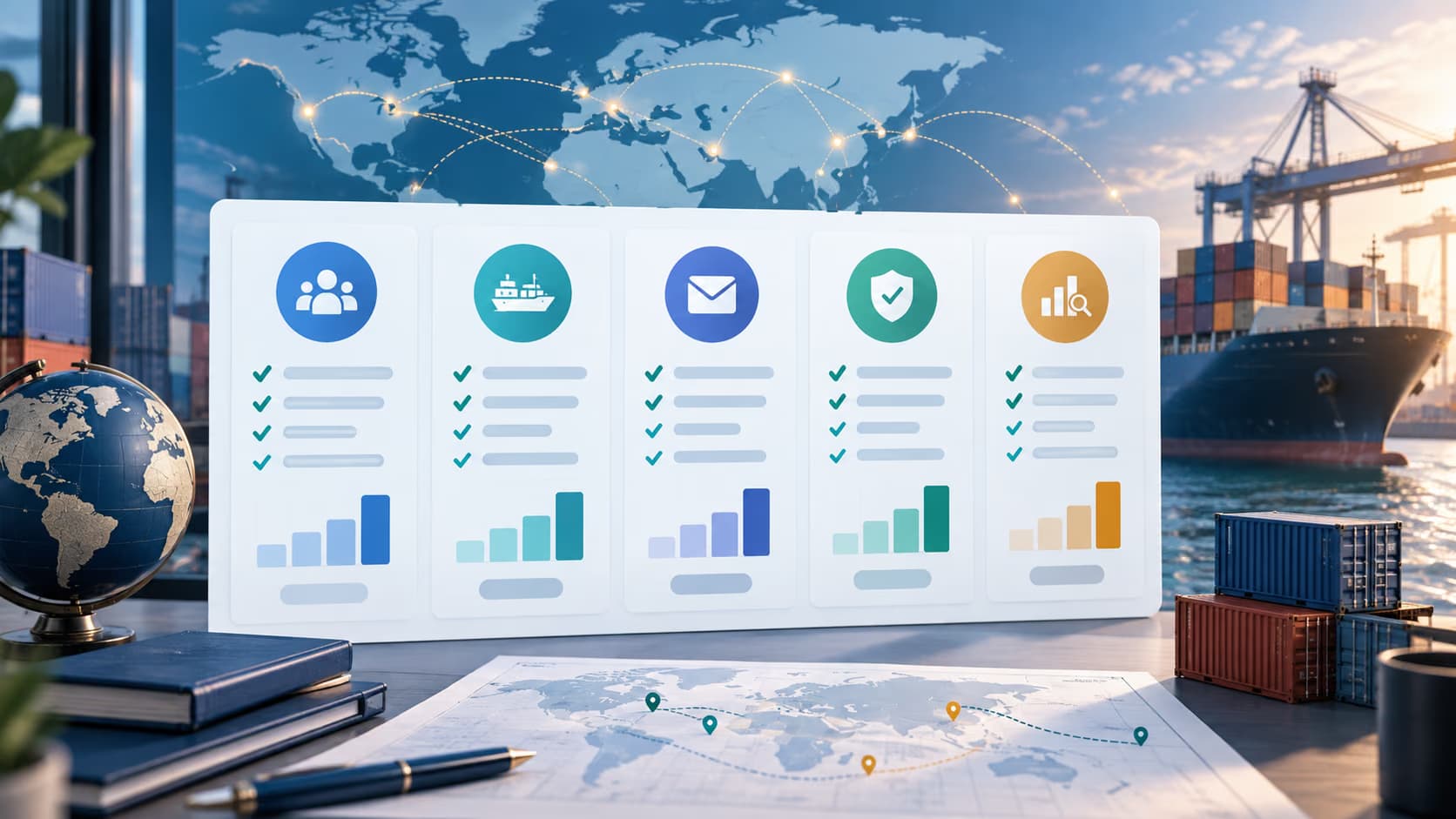
Finds and researches importers from customs shipment records, builds company profiles, finds decision-maker contacts and drafts personalized outreach.
Reads market demand, buyer concentration and price direction.
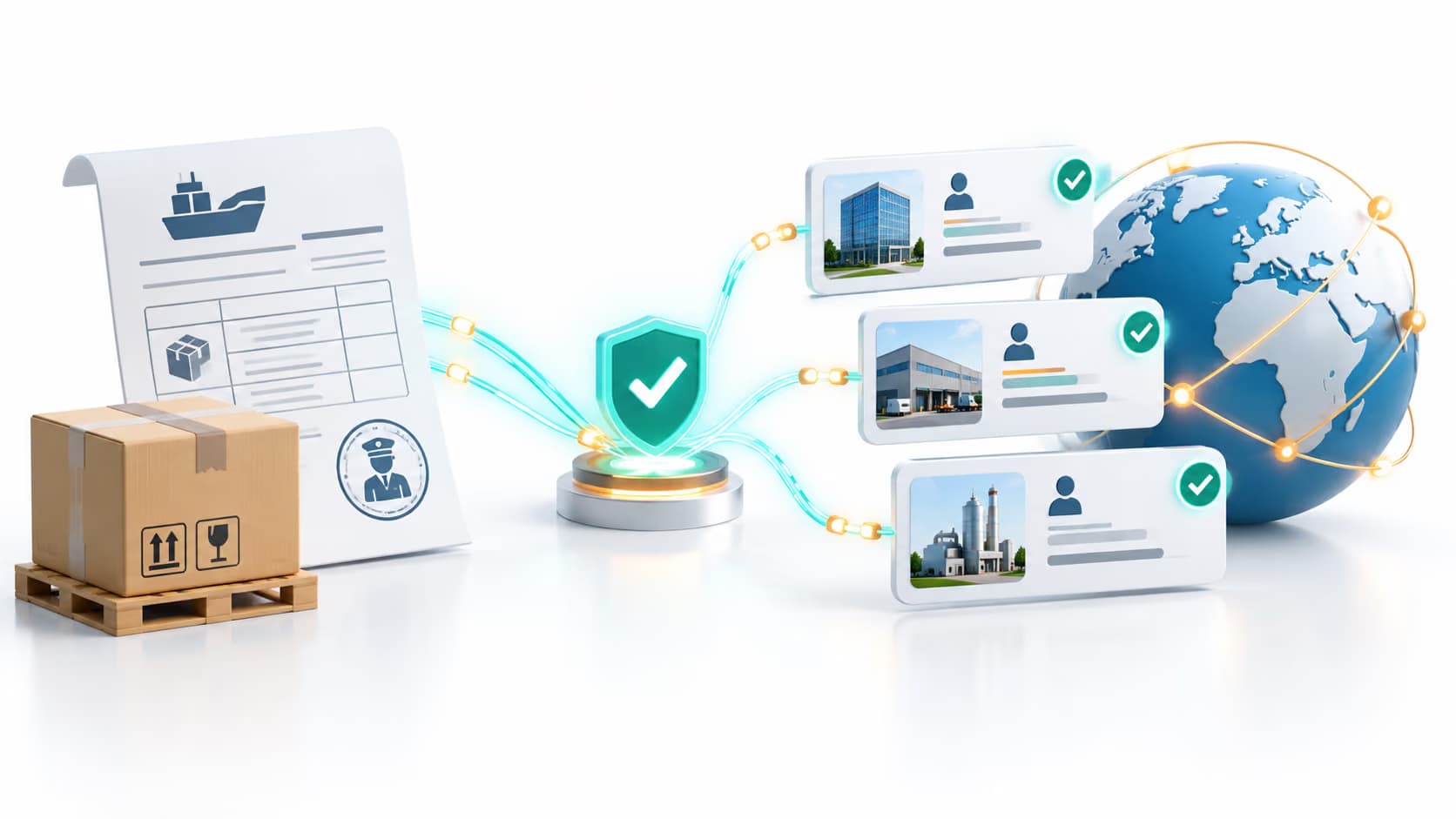
Suggests HS codes, looks up tariffs and screens names against the OFAC SDN list (advisory).
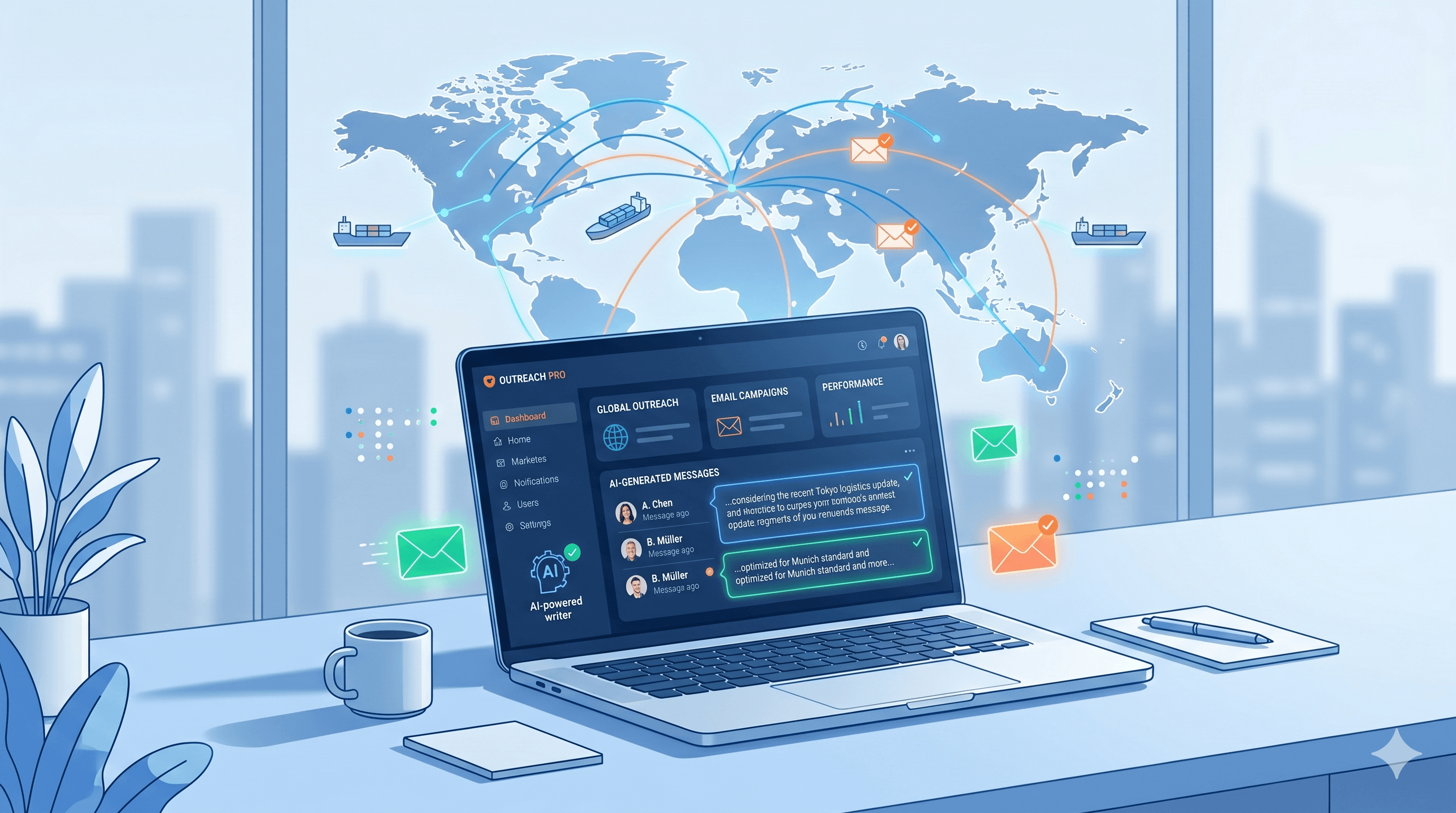
Here is where most outreach falls apart. Once the company and contact are identified, the next hurdle is the blank screen. Too many people simply stare at it or settle for a overused template that everyone else is sending.
EximAgent's Outbound agent drafts an individual email for each prospect by combining the prospect's company profile with your own USP. The output is a per-recipient draft, not a mail-merged blast.
A note on tone: consistency across messages matters more than cleverness. If your first email is formal and your follow-up sounds like a different person wrote it, the prospect notices. Set your voice once — in your profile and templates — and let the AI stay within it.
You will read a lot of 2026 outreach content claiming that SMS, phone calls, and LinkedIn automation are now essential. For some B2C businesses, that is true. For import/export, the picture is more nuanced:
One pattern worth calling out, because it works across channels and languages: warm up before you pitch. In import/export, this does not have to mean elaborate multi-channel choreography. Often it is as simple as:
That is it. No SMS blast, no LinkedIn mass-connect, no AI-generated video. Just accurate, profile-grounded outreach that respects the recipient's time. Response rates on this approach consistently beat channel-stuffing — not because the channels are wrong, but because relevance beats reach at import/export-scale deal values.
If you are setting up automated outreach for an import/export team in 2026, here is a practical order of operations:
Automated outreach in 2026 is not about pushing more volume through more channels. It is about grounding every message in real data — about your business, about the prospect, about what actually matters to them — and using AI to make that grounding scalable. For import/export teams, the win is not a flashy multi-channel stack. It is a tight, honest email workflow where the research, the drafting, and the sending all pull from the same source of truth.
Start with the profile. Add the agents one by one. Measure what sends produce replies, and let that data — not a trend article — shape your next move.
What makes import/export outreach different from general B2B outreach? Cross-border, cross-language, cross-time-zone communication with long sales cycles and high per-deal values. Generic outreach tools treat every lead as equivalent; import/export outreach needs to account for HS codes, customs data, trade agreements, and the specific language of import-export. That is why purpose-built tooling tends to outperform general-purpose CRMs for this segment.
Does AI replace the salesperson? No, and any vendor claiming otherwise is overselling. What AI currently does well is research (finding companies and contacts) and drafting (writing a per-prospect first email). The human still decides who to target and handles the actual conversation once someone replies.
What about SMS, phone, and LinkedIn automation? EximAgent drafts email outreach; other channels are outside its current scope.
How does lead qualification work here? Outbound builds a company profile for each candidate and Analyst reads its trade activity. You review that research and decide which companies are worth an email.
What do I do if the AI gets something wrong in a draft? Edit the draft. Outbound produces drafts, not final sends, and AI output is not always right. As your company profile gets sharper, draft quality improves.
Criteria | Traditional Outreach | AI-Driven Outreach (2026) |
Data Basis | Raw CSV Lists | Profile-Grounded Intelligence |
Personalization | Name-based Placeholders | Deep Product & Market Analysis |
Channels | Generic Email Blasts | Multi-agent Workflows (Email-first) |
Table 1: Evolution of international trade outreach strategies in 2026, comparing manual bulk methods with EximAgent's profile-grounded AI workflows.
Find buyers for your product. Ask EximAgent's Outbound agent in plain language at chat.eximagent.ai. Free plan, no card. See pricing.
EximAgent Research writes practical guides on finding buyers, reading trade data and checking HS codes, tariffs and sanctions.
Enter your email to receive the latest trade insights, guides, and HS-code explainers from EximAgent Blog.