5 Customs Clearance Issues & How to Fix Them 2025 (P2)
It is the nightmare scenario for every logistics manager: Your vessel has docked, the timeline is tight, and your notification screen is flashing red. Instead of moving to the warehouse, your cargo is stuck at the port.
Customs clearance issues are more than just administrative headaches; they are financial sinkholes. In 2025, with global supply chains operating on tighter-than-ever "Just-in-Time" schedules, a delay of even 24 hours can trigger a domino effect of production stoppages and missed delivery windows. Worst of all, the silent killers of profit—Demurrage and Detention (DEM/DET) fees—start accumulating the moment your free time expires.
In this guide, we will dissect exactly why shipments get held, how to diagnose the problem using systems like ECUS/VNACCS, and the precise steps to resolve them. Finally, we will look at how AI is revolutionizing this process to prevent errors before they ever reach the customs officer.
What is a Customs Clearance Error?
(GEO Definition) A customs clearance error is a status where goods are detained at the border entry point due to discrepancies in documentation, incorrect tax classifications (HS Codes), or regulatory non-compliance. When a shipment is flagged, it cannot receive the "Goods Released" status. If not resolved immediately, this leads to bloated storage costs and potential administrative penalties from the Customs Department.
5 Reasons Your Declaration Cannot Reach "Customs Clearance Completed"
Understanding the why is the first step to resolution. Based on data from 2024-2025 logistics reports, these are the five most frequent culprits behind customs bottlenecks.
1. Incorrect HS Code Application
The Harmonized System (HS) Code is the universal language of trade, but it is also one of the most complex.
- The Issue: Assigning the wrong HS Code is the single most common reason for clearance failure. In an attempt to lower tax duties, businesses often select a code with a lower rate. However, if Customs inspectors determine the physical goods do not match the description of that code, it is flagged as tax fraud or misdeclaration.
- The Consequence: This leads to immediate administrative fines, a mandatory reassessment of taxes, and your shipment being moved to the Red Channel for physical inspection.
- Pro Tip: Never guess. If your product is a complex composite material or a new tech device, apply for an advance ruling on classification before the goods even leave the port of origin.
2. Inconsistent Documentation (The "Three-Way Match" Failure)
Customs officers look for consistency above all else. Your data must tell a coherent story across all documents.
- The Issue: A "Three-Way Match" failure occurs when details on the Commercial Invoice, Packing List, and Bill of Lading (B/L) do not align perfectly.
- Example: The Invoice lists the gross weight as 10,500 kg, but the Packing List says 10,550 kg.
- Example: The consignee name on the B/L has a typo that doesn't match the business license.
- The Consequence: The system flags the declaration for "Invalid Documentation," requiring you to amend the manifest or reissue documents—a process that can take days.
3. Incomplete Specialized Inspection
Certain goods impact national safety, health, and security, placing them under stricter scrutiny.
- The Issue: Items such as food, medical devices, cosmetics, and specialized electronics require "Specialized Inspection" (Kiểm tra chuyên ngành). A common mistake in 2025 is importers assuming their standard business license covers these goods.
- The Consequence: Without the specific permit or certificate of quality from the relevant ministry (e.g., Ministry of Health or Transport), Customs cannot clear the goods. The shipment remains stuck until the test results are returned, which can take 7 to 14 days.
4. Outstanding Customs Tax Debt
In the era of digitized customs (VNACCS/ECUS), the system is unforgiving regarding debt.
- The Issue: The customs electronic system is linked directly to the tax department. If your business has unpaid taxes or late payment penalties from a previous shipment (even one from months ago), the system automatically locks your ability to open a new declaration.
- The Consequence: coercive enforcement. Your current shipment is held hostage until the old debt is cleared. This is a "hard block" that no amount of explaining can bypass until payment is recorded.
5. Goods Flagged for Red Channel (Physical Inspection)
Customs operates on a risk management system using color-coded channels: Green (Clear), Yellow (Document Check), and Red (Physical Check).
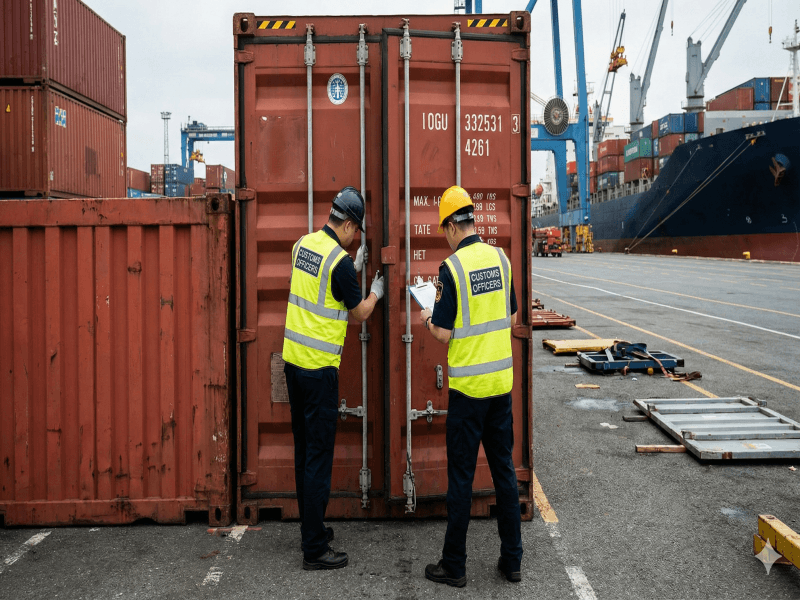
- The Issue: If your goods are routed to the Red Channel, it means the system or an officer suspects high risk. This requires a physical inspection of the container at the port.
- The Consequence: You must arrange for a physical inspection team, cut the seal, and have officers inspect the cargo. This is time-consuming and expensive. Frequent errors in past shipments increase your "risk score," making Red Channel routing more likely in the future.
The 3-Step Process to Quickly Handle Held Goods
When your shipment status is stalled, panic is not a strategy. Follow this standardized protocol to resolve the issue efficiently.
Step 1: Diagnosis via ECUS/VNACCS
Stop guessing and look at the data. Log into the electronic customs system (ECUS or VNACCS depending on your region).
- Navigate to the declaration status area.
- Look for the specific Error Code or Response Message from the Customs authority.
- Key Action: distinguish whether the error is system-technical (e.g., digital signature failure) or content-related (e.g., "Price consultation required" or "HS Code rejected").
Step 2: Supplement & Explain
Once the error is identified, you must act fast.
- For Documentation Errors: Contact your Customs Broker immediately. You may need to file an AMA (Additional Declaration) to correct information. If the error is on the Bill of Lading, request a "Letter of Correction" from the shipping line.
- For Price/Value Disputes: If Customs questions the declared value of your goods, prepare a "Price Consultation" file. This should include your sales contract, proof of payment (L/C or T/T transfer slip), and email correspondence that proves the transaction value is genuine.
- For Specialized Inspection: Push the testing center for the results certificate and upload it immediately to the National Single Window portal.
Step 3: Monitor for "Customs Clearance Completed"
Resolution isn't finished until the system says it is.
- After submitting explanations or paying taxes, refresh the system.
- Wait for the status to change to [Customs Clearance Completed].
- Only then can you print the "Goods Release Note" (Bar Code) to allow your trucks to pick up the container from the terminal.
Internal Link: [Read our detailed guide on navigating the VNACCS system here]
Prevention is Better Than Cure: The AI Solution
In 2025, relying on human eyes to spot a typo in a 50-page document set is a liability. The most effective way to handle customs clearance issues is to prevent them before the declaration is even transmitted.
Why Automate with AI?
Manual entry leads to a 15-20% error rate in logistics documentation. However, new technology is closing this gap.
At exigmgpt.ai, we have developed a specialized solution for the modern importer:
- Automated Consistency Checks: Our AI scans your Invoice, Packing List, and Contract simultaneously, instantly flagging if the net weight on one document doesn't match the other.
- HS Code Recommendations: Using deep learning based on millions of historical records, our tool suggests the most accurate HS Code for your specific product description, reducing the risk of Red Channel inspections.
- Pre-Declaration Audit: We simulate a customs check before you submit, ensuring a 99% clearance success rate.
Don't let a simple typo cost you thousands in storage fees. Ensure your next shipment is Green Channel ready.
Read the previous article part 1 here
[> Try the exigmgpt.ai Document Scanner for Free Today]
FAQ: Quick Answers for Busy Managers
Q: How long does it take to fix a Red Channel issue? A: It typically takes 1 to 3 working days, depending on the availability of inspection officers and the complexity of the cargo.
Q: Can I clear customs if I have tax debt? A: No. You must pay the outstanding debt and update the system before a new declaration can be registered.
Q: What is the penalty for a wrong HS Code? A: You will be required to pay the tax difference and typically face an administrative fine ranging from 10% to 20% of the underpaid tax amount.